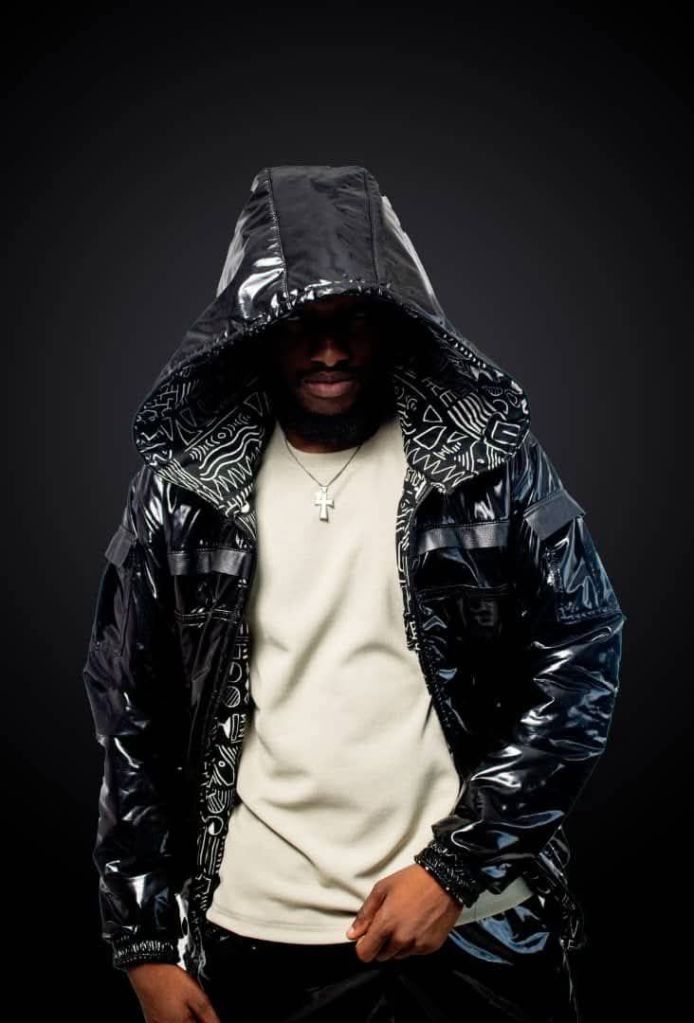
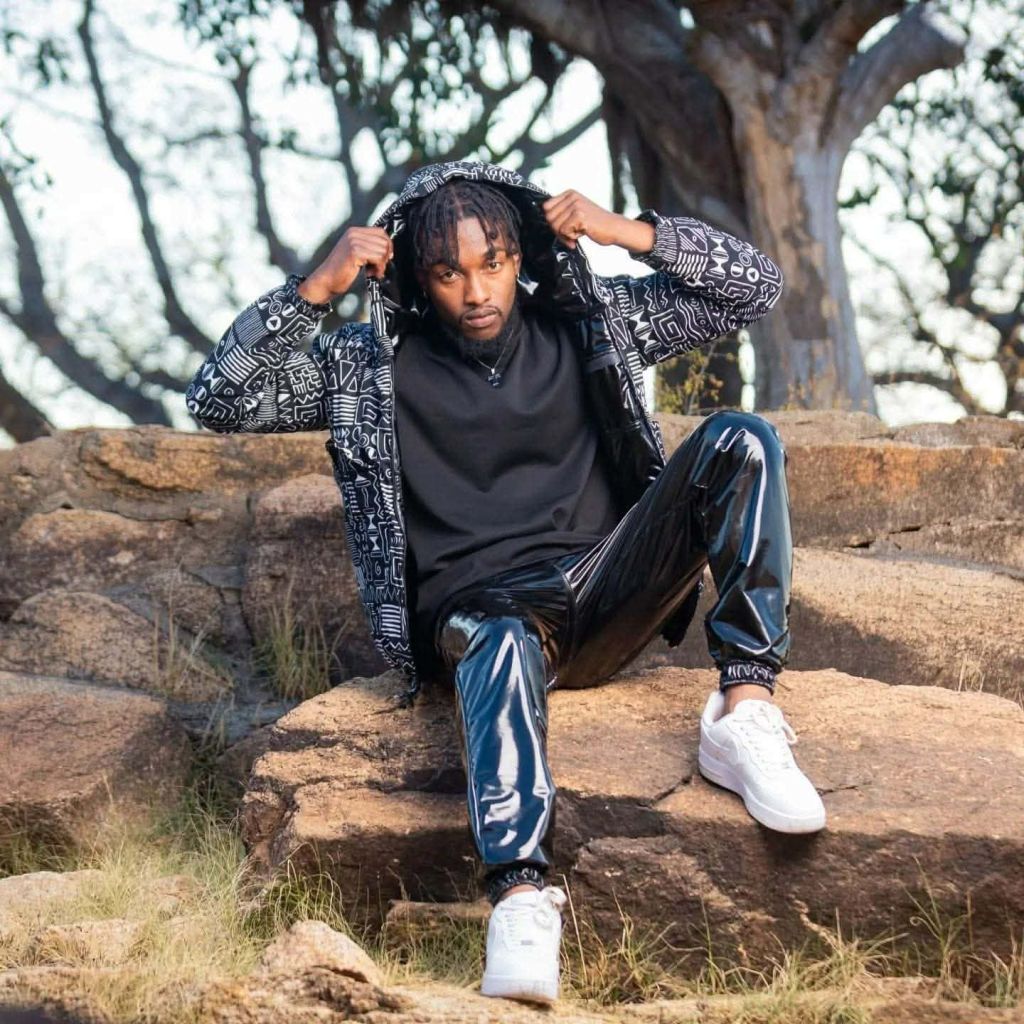
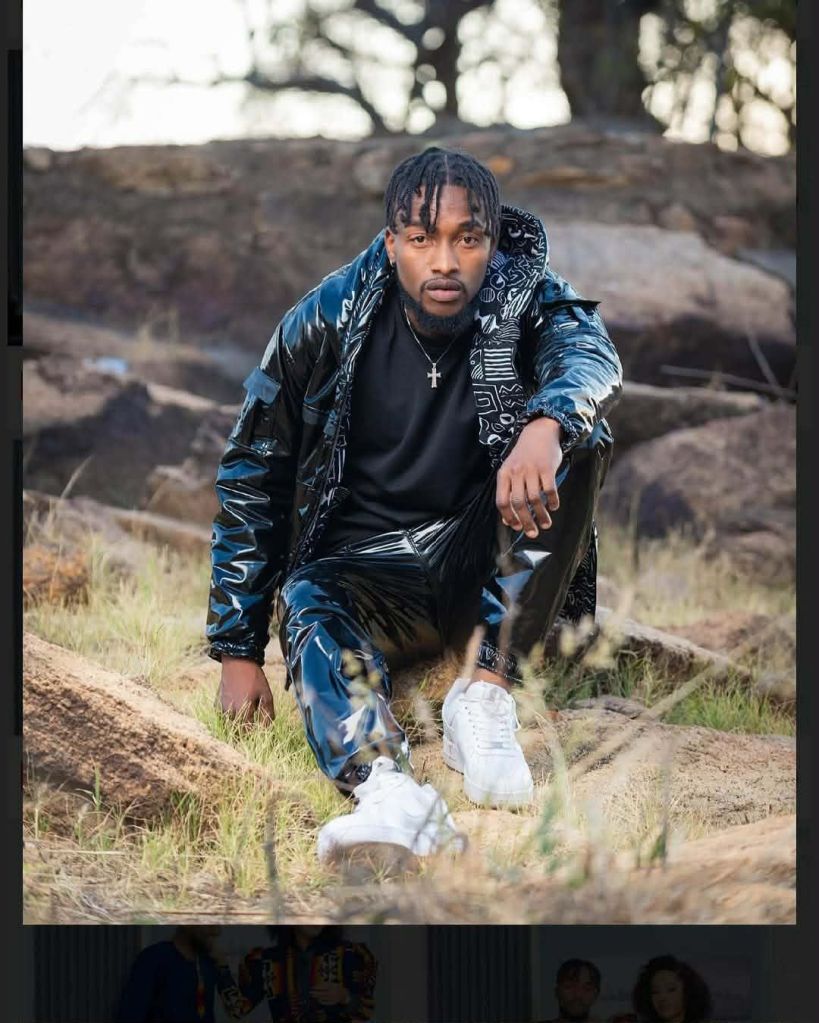
THE JOHN COLE EFFECT :Inside the Mind of Africa’s Most Dynamic Choreographer

THE JOHN COLE EFFECT
Inside the Mind of Africa’s Most Dynamic Choreographer
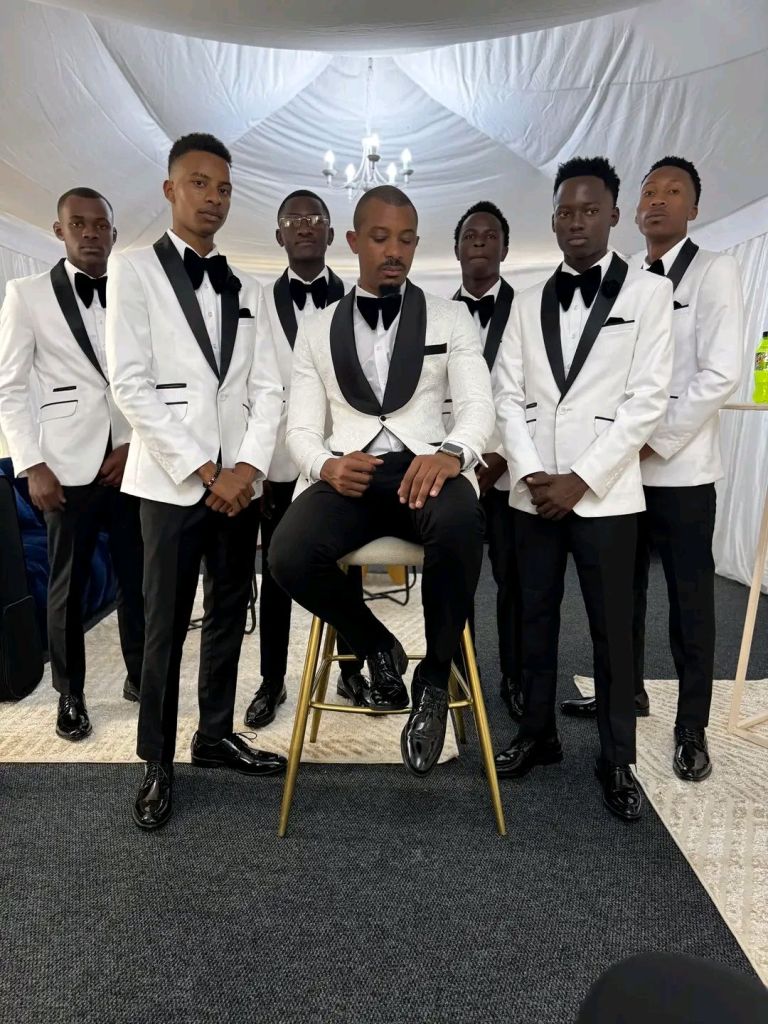
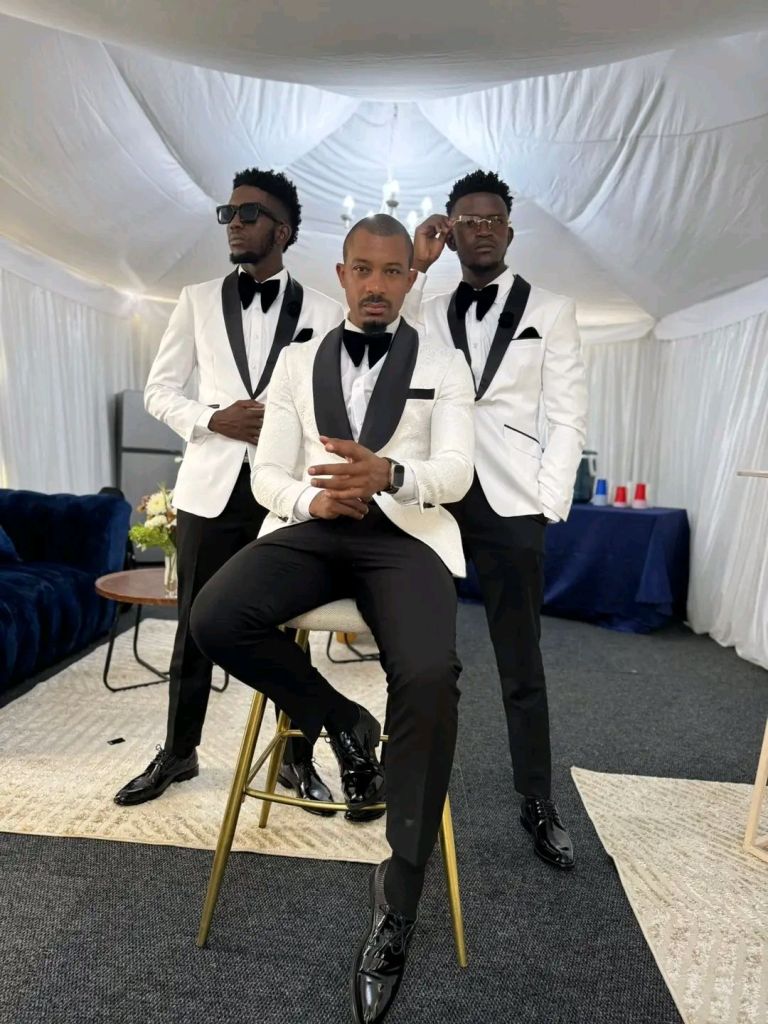
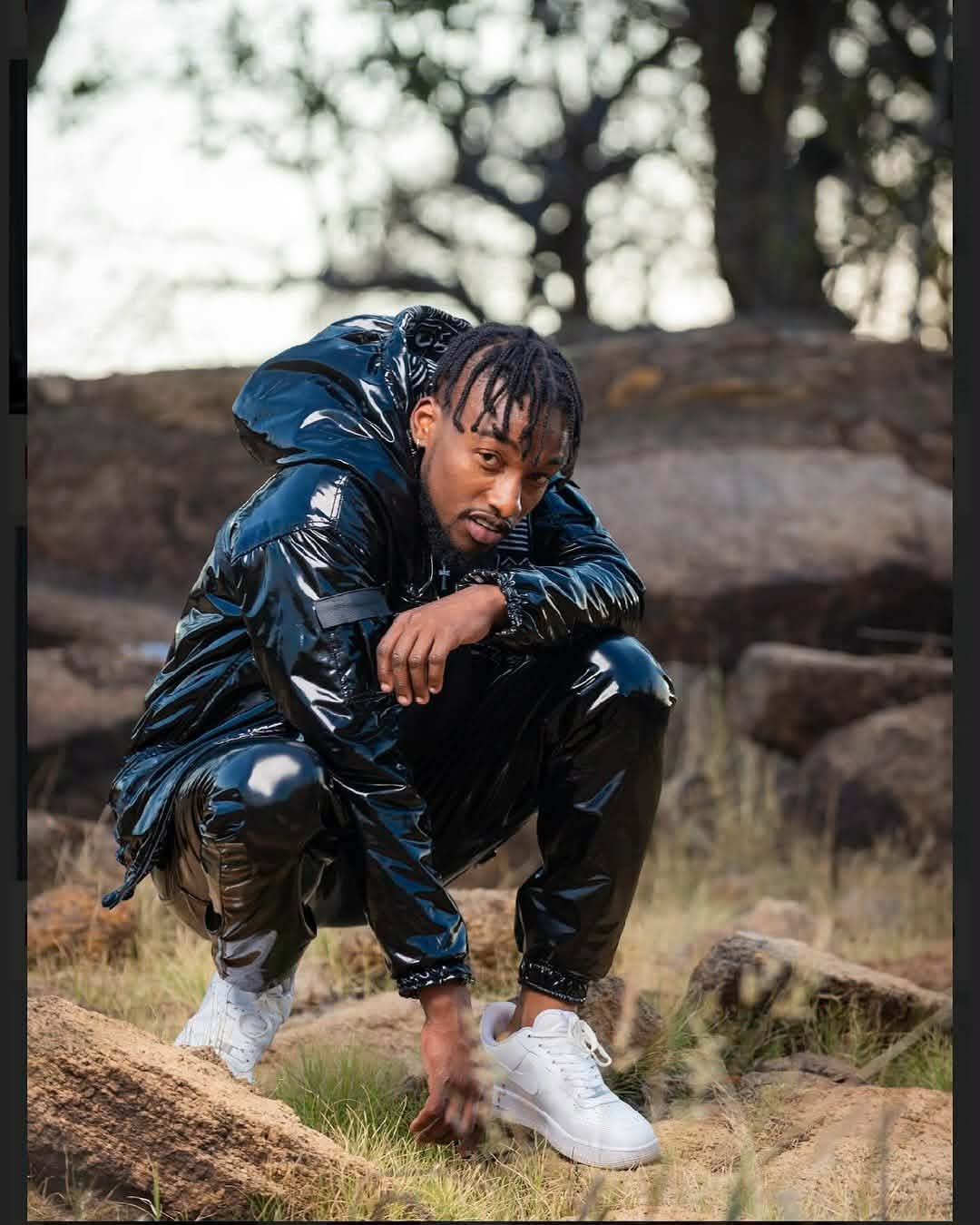
Few names in African choreography command attention quite like John Cole.
Known for his electrifying creativity, signature choreography, and unmatched ability to transform moments into memories, the Zimbabwean dance visionary has spent years building a reputation that now stretches far beyond the continent’s borders.

Whether choreographing weddings, mentoring young talent, or carrying African culture onto international stages, Cole has become more than a choreographer — he has become a movement.


Today, his influence can be felt from Zimbabwe to South Africa, from the Philippines to audiences across the globe who have embraced his unique approach to dance, storytelling and performance.


Yet despite the growing international recognition, Cole remains deeply connected to the values that first inspired his journey.
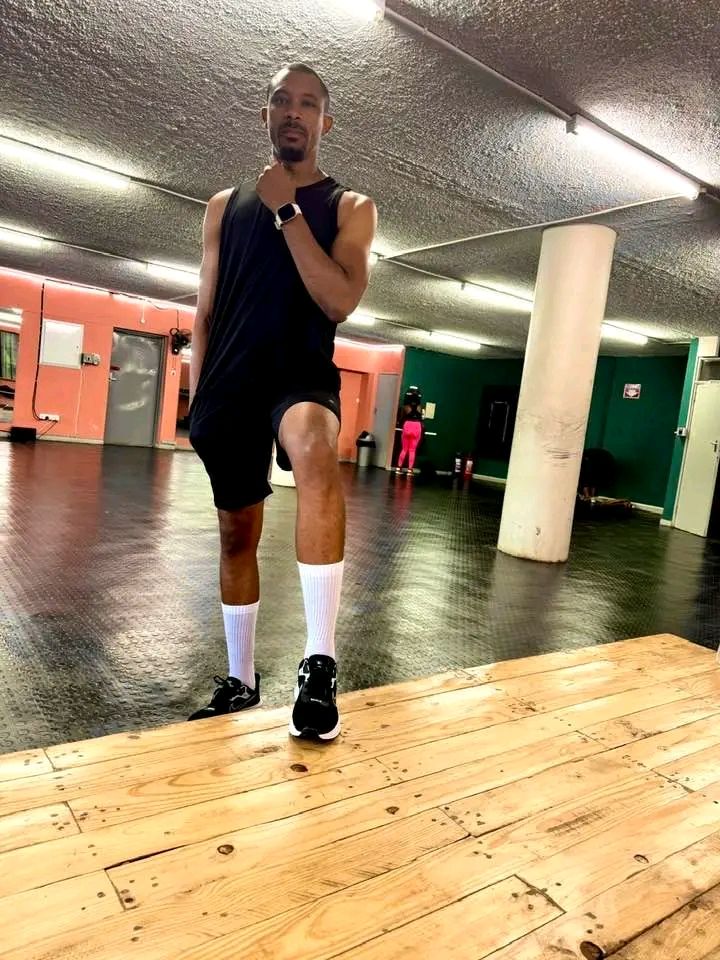

“Traveling around Africa and the world is quite amazing,” Cole reflects.

“My first international wedding was in the Philippines and South Africa, and from there it expanded to other countries. It’s been one amazing experience after another.”


For many creatives, global success can dilute cultural identity. For John Cole, it has done the opposite.


Every international stage has strengthened his commitment to representing Africa with pride.


“Being able to choreograph something based on someone’s music genre is an amazing experience. I’m able to break it down, create, synchronize and remain patriotic as an African,” he says.


“Whether I’m in the Philippines or anywhere else, I carry African music, African energy, African legacy and African everything with me.”


That philosophy has become the foundation of the John Cole brand — a brand built on authenticity, cultural pride and emotional connection.


As African music continues its meteoric rise across global charts, dance has emerged as one of the continent’s most powerful cultural exports.


According to Cole, dance is one of the few universal languages capable of connecting people regardless of nationality, race or background.


“People just want to have fun,” he says. “They want to do the Shaku Shakus, the Amapiano dance styles and all these different movements. That’s what brings people together. It’s what they see every day and it becomes part of their rhythm.”


The explosion of African sounds and dance movements has created a new generation of performers and fans who see themselves reflected in the culture.
For Cole, rhythm is more than simply moving to music.


“Rhythm is being able to move like what you’ve seen. People want to dance like John Cole, dance like Davido, dance like Makhadzi, dance like Jah Prayzah, dance like Winky D. That’s what people connect with.”


But beneath every performance lies something far more profound.
“Storytelling. Every dancer needs to have a story and leave something on the dance floor for people,” he says.


“For me, it’s a movement with an experience. It’s not just dance.”
This commitment to storytelling has become one of the defining characteristics of his work.


Whether choreographing a wedding entrance, a corporate production or a major performance, Cole approaches every project with the same objective: create an unforgettable experience that people will remember long after the music ends.


It is a philosophy that has earned him admiration across multiple industries and transformed him into one of Zimbabwe’s most recognizable creative exports.
In an industry where originality can often be difficult to maintain, John Cole has managed to create something many artists spend a lifetime chasing — an unmistakable identity.


Ask his supporters what makes a John Cole production unique and most will point to the energy, emotion and precision that define his work.


Cole simply calls it his signature.
“Everything about John Cole is 100% unique,” he says.


“I take inspiration from different genres and different aspirations, but I always leave something of myself in every performance.”
That personal touch has become instantly recognizable to audiences.


“The fans, supporters, corporates and artists always recognize it,” he says with a laugh.
“I won’t tell you exactly what it is, but you’ll always know when it’s John Cole.”


And perhaps that mystery is part of the magic.
While Cole’s career continues to flourish internationally, another chapter of his story is unfolding much closer to home.


His sons, Avant and Duncan Cole, are increasingly becoming part of the creative ecosystem surrounding the John Cole brand.
Both possess very different talents.
“Avant has his own story to tell and so does Duncan,” Cole explains.


“Avant is a drummer while Duncan is a dancer.”
Yet despite their involvement, Cole is determined not to impose expectations on them.
Instead, he hopes to teach them the values that helped shape his own success.
“I believe your kids should grow up knowing how to hustle and flow,” he says.
“They will decide what they want in life. I’m not saying Avant should be this or Duncan should be that. They must choose their own paths.”


For now, both sons contribute behind the scenes, assisting with video production and supporting various aspects of the growing brand.


“They’ve been recording videos and working behind the scenes. It’s powerful watching them grow and develop their own identities.”


Perhaps the most remarkable thing about John Cole is his humility.
Despite becoming one of Africa’s most recognizable choreographers, he refuses to take sole credit for his achievements.
Instead, he points to the people who have supported him every step of the way.


“It’s the public that made me an international choreographer,” he says.
“It’s the people who hired me, the people of Zimbabwe and people living in countries across the world. It’s not my doing. It’s the people.”


That sentiment explains why many affectionately refer to him as “The People’s Choreographer.”


Every standing ovation, every packed dance floor, every wedding celebration and every international booking is, in his eyes, a reflection of the people who believed in his vision.


For John Cole, success has never been about personal glory.


It has always been about creating moments that bring people together.
As African culture continues to shape global entertainment, John Cole stands at the forefront of a generation redefining what it means to be an African creative on the world stage.


His story is one of movement, resilience, cultural pride and innovation.


A story still being written.
And if his journey so far is any indication, the best may still be yet to come.


“You are going to see a lot more of John Cole and my sons, Avant and Duncan,” he says.
For the millions inspired by his work, that is exciting news.
Because the John Cole effect is no longer simply about dance.
It is about legacy.
It is about culture.
It is about Africa.
HOW THEMBANI MUBOCHWA CREATED THE MOST TALKED-ABOUT GROOM LOOK OF A NEW GENERATION

HOW THEMBANI MUBOCHWA CREATED THE MOST TALKED-ABOUT GROOM LOOK OF A NEW GENERATION

The Zimbabwean designer behind Anesu Mhembere’s unforgettable wedding suit reveals the craftsmanship, pressure and vision that transformed a groom into a fashion statement.

In a world where weddings increasingly blur the lines between personal celebration and cultural spectacle, Zimbabwean designer Thembani Mubochwa delivered a masterclass in modern tailoring.

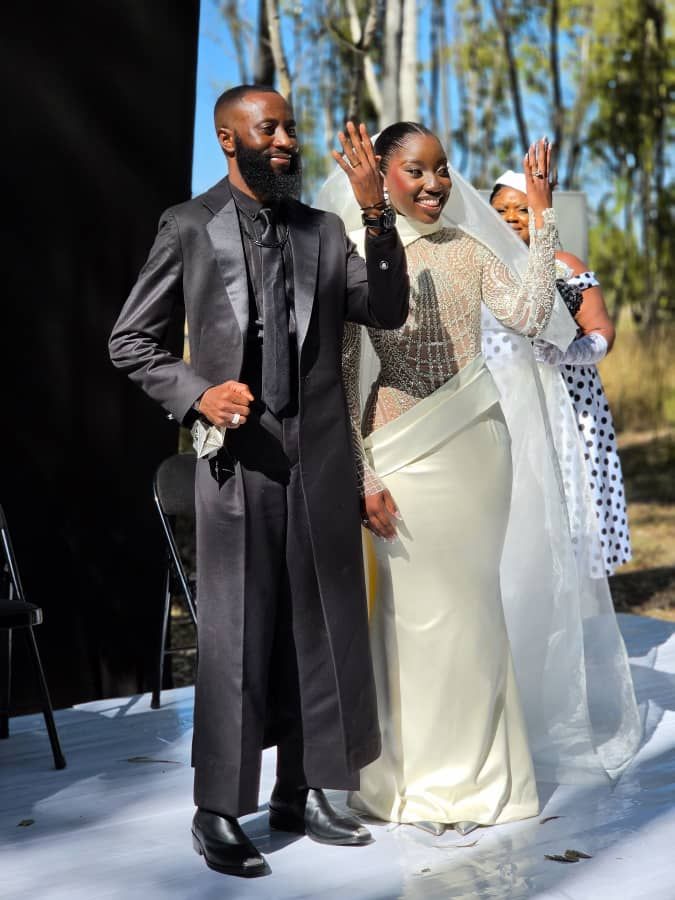
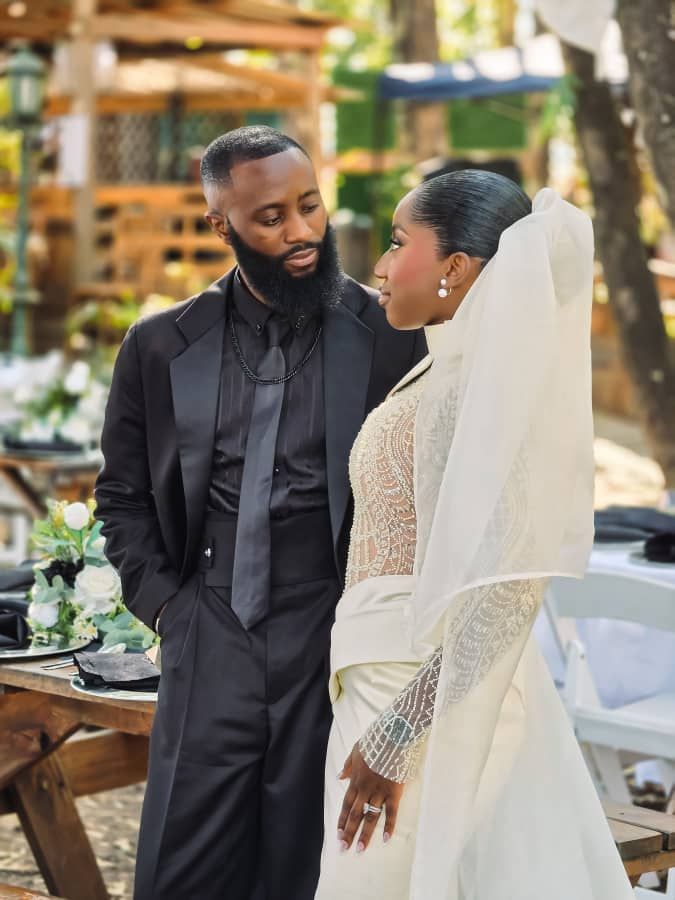
When celebrated creative director Anesu Mhembere prepared for one of the most important days of his life, he turned to a designer known for pushing boundaries while respecting timeless elegance. The result was a wedding suit that became more than attire — it became one of the defining fashion moments of the season.

For Mubochwa, the commission carried enormous significance.

“I felt honored and, at the same time, scared,” he admits. “This was one of the most difficult projects I have had to deliver because Anesu is one of the best creative directors we have in our industry. The expectations were naturally very high.”

That pressure became the foundation for a design that would ultimately capture attention long before the reception began.

Designing Character, Not Just Clothing

Rather than simply creating a luxurious suit, Mubochwa focused on translating Mhembere’s personality into fabric, silhouette and detail.

The wedding theme became the starting point.

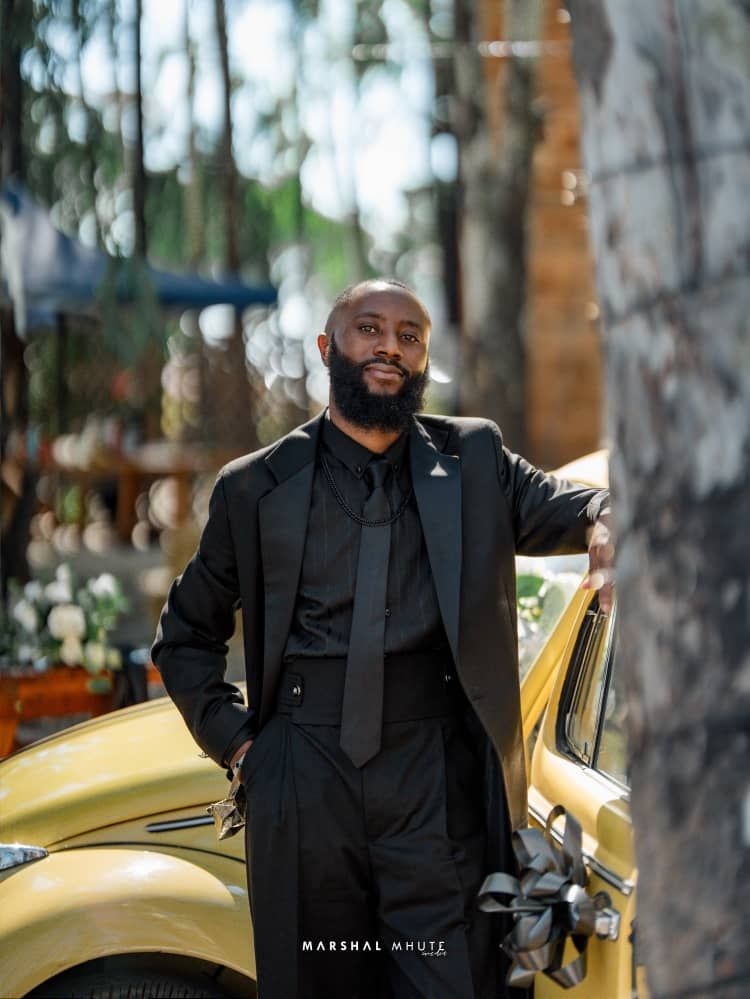
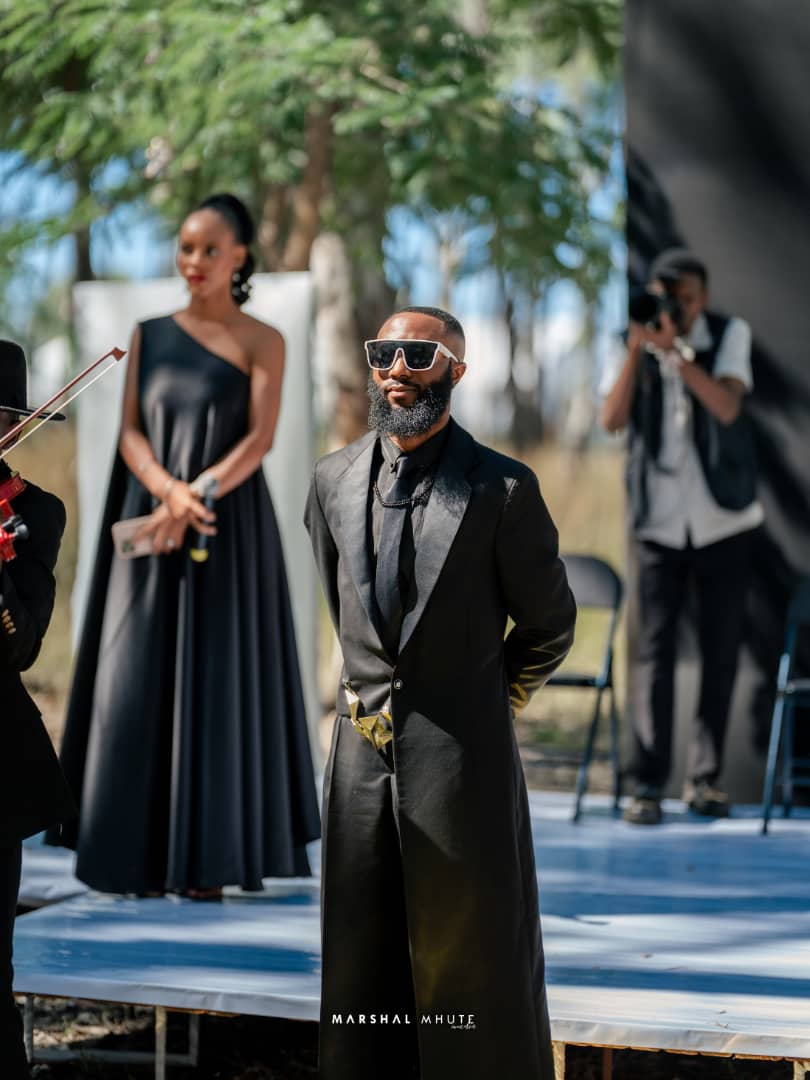
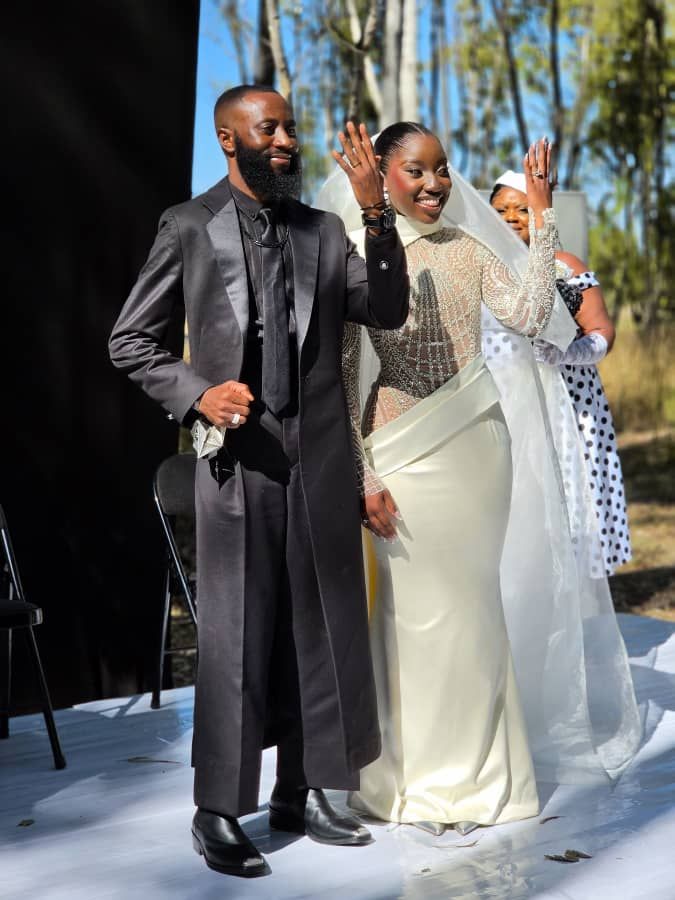
Drawing inspiration from Regency-era tailoring while maintaining contemporary sophistication, Mubochwa introduced a sleek longline tailcoat that fell below the knee, creating an elongated and statuesque silhouette. Unlike traditional ceremonial coats, the design avoided dramatic coattails, embracing restraint over excess.

“The wedding theme helped me tailor the suit and embrace Anesu’s style,” Mubochwa explains. “I wanted something fashion-forward but still subtle.”

Peak satin lapels added a refined sense of evening formality, while matte black wool absorbed light rather than reflecting it, creating a quiet luxury aesthetic reminiscent of the finest tailoring traditions of nineteenth-century Europe.

Every element was intentional.

A geometric metallic brooch positioned at the hip served as a contemporary reinterpretation of the gentleman’s fob chain — a subtle nod to Regency ornamentation without becoming theatrical.

The result was a garment that felt historical yet modern, dramatic yet understated.

The Groom as the Runway Star

Perhaps the most surprising element of the celebration was the fashion experience embedded within the wedding itself.

Rather than introducing separate models or a dedicated runway presentation, Mubochwa elevated the groom into the show’s central figure.

“The groom was the model of the day,” he says. “He showcased Thembani Mubochwa Bespoke Apparel through his sleek and subtle Regency suit.”

The approach transformed the wedding floor into a living fashion presentation while ensuring that the spotlight remained exactly where it belonged — on the couple.

It was a delicate balance between spectacle and sentiment, one that reflected Mubochwa’s understanding that fashion should enhance a moment rather than overpower it.

The Surprise Fitting

One of the most remarkable aspects of the project was that Mhembere had not seen the completed vision until shortly before the wedding.

The final fitting took place just two days before the ceremony.

“The groom was impressed because it was a surprise design,” Mubochwa reveals. “He had no idea what was coming. The fittings were on point, but we made a few final adjustments to make the coat fit even better.”

For a designer, there are few moments more rewarding than witnessing a client’s first reaction to a finished piece. In this case, the reveal confirmed that the months of planning and craftsmanship had successfully translated vision into reality.

Tailoring for Elegance and Endurance

Designing wedding attire presents a unique challenge. A groom must look impeccable from the first photograph to the final dance, often enduring long ceremonies, emotional moments and hours of celebration.

Mubochwa addressed this through intelligent construction and proportion.

The suit’s Regency-inspired DNA remained central throughout the design process. The elongated coat, wide-leg trousers and satin peak lapels created a powerful silhouette while preserving comfort and mobility.

“The longline coat, satin peak lapels and wide-leg trousers create the elongated silhouette of 1810s formalwear, grounded in modern minimalism,” he explains.

The geometric brooch remained the sole decorative statement, proving that luxury often speaks loudest through restraint.

Creating a Lasting Fashion Legacy

The success of Mhembere’s wedding look has reinforced Mubochwa’s position as one of Zimbabwe’s most exciting luxury designers.

The project demonstrated that African tailoring can confidently engage with global fashion history while creating something entirely original.

It also highlighted a growing demand among modern grooms for garments that tell stories rather than simply follow tradition.

Today, more clients approach Mubochwa seeking bespoke pieces that combine craftsmanship, individuality and cultural relevance.

And for those wondering how he would summarize the now-iconic wedding suit in just three words?

His answer arrives without hesitation:

Regency. Statuesque. Minimalist.

Three words that perfectly capture a garment destined to be remembered long after the final wedding photograph was taken.

As luxury menswear continues to evolve across Africa and beyond, Thembani Mubochwa’s creation stands as proof that true elegance is never about excess. It is about vision, precision and the courage to create something unforgettable.

And in dressing one of Zimbabwe’s leading creative minds, Mubochwa delivered exactly that.

Runway, Reel & Reverence: How Bulawayo’s Faizil Rewriting the Rules of African Modelling


Runway, Reel & Reverence: How Bulawayo’s Terrence Is Rewriting the Rules of African Modelling


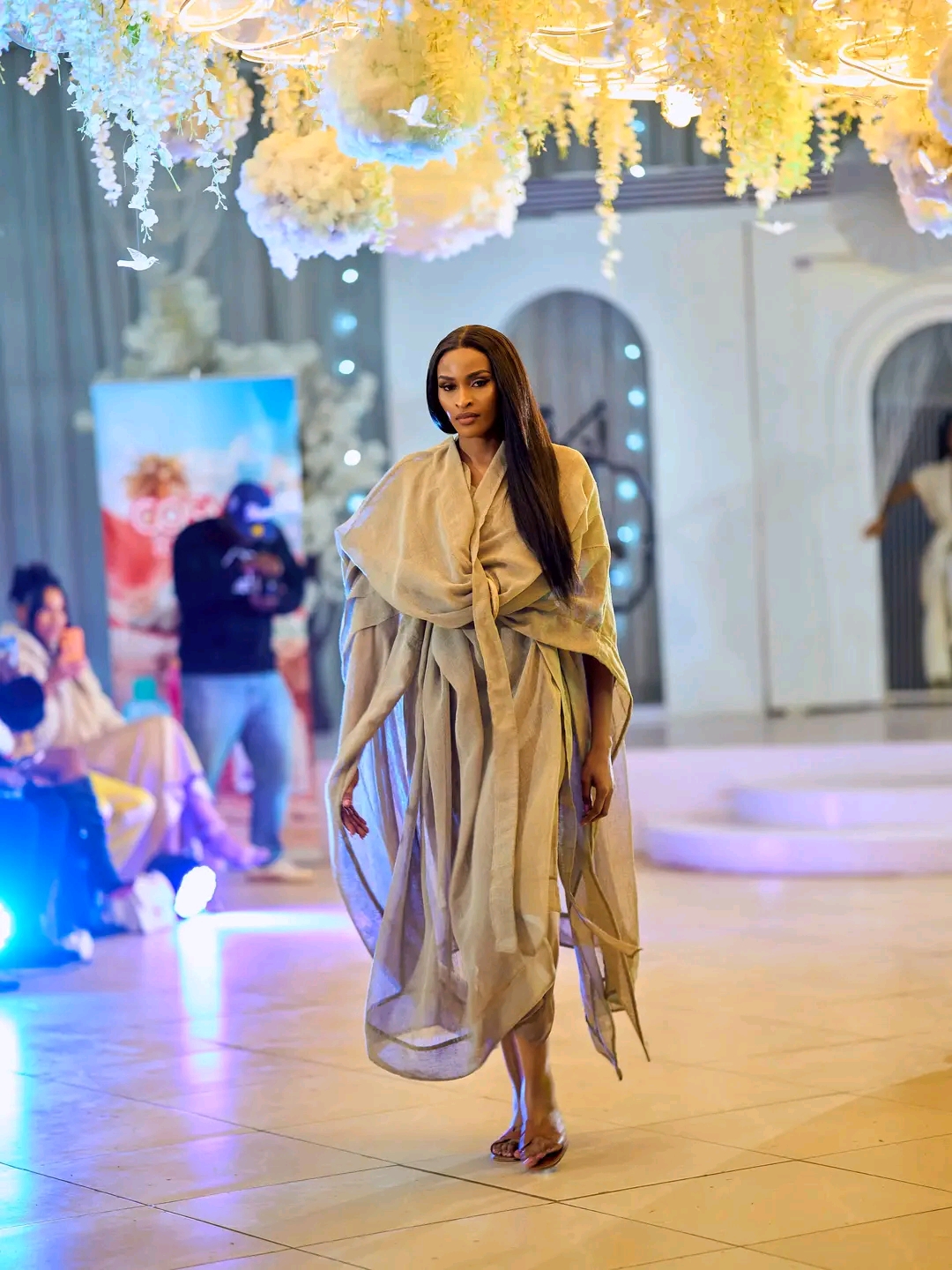
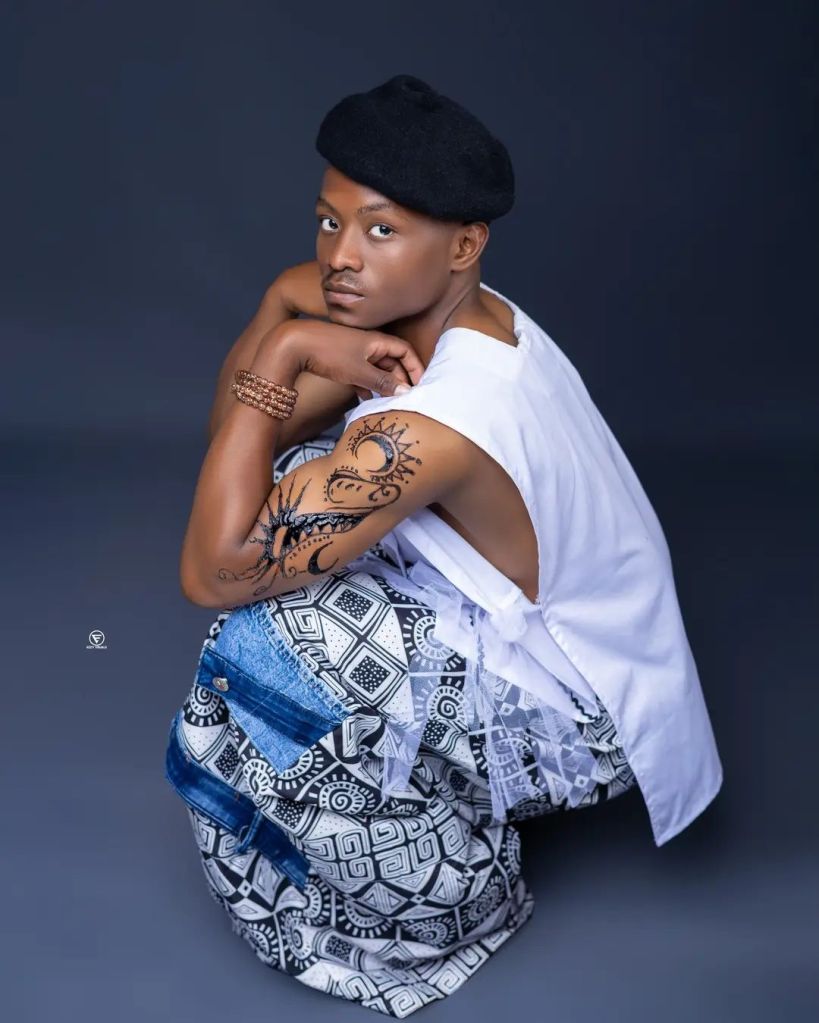
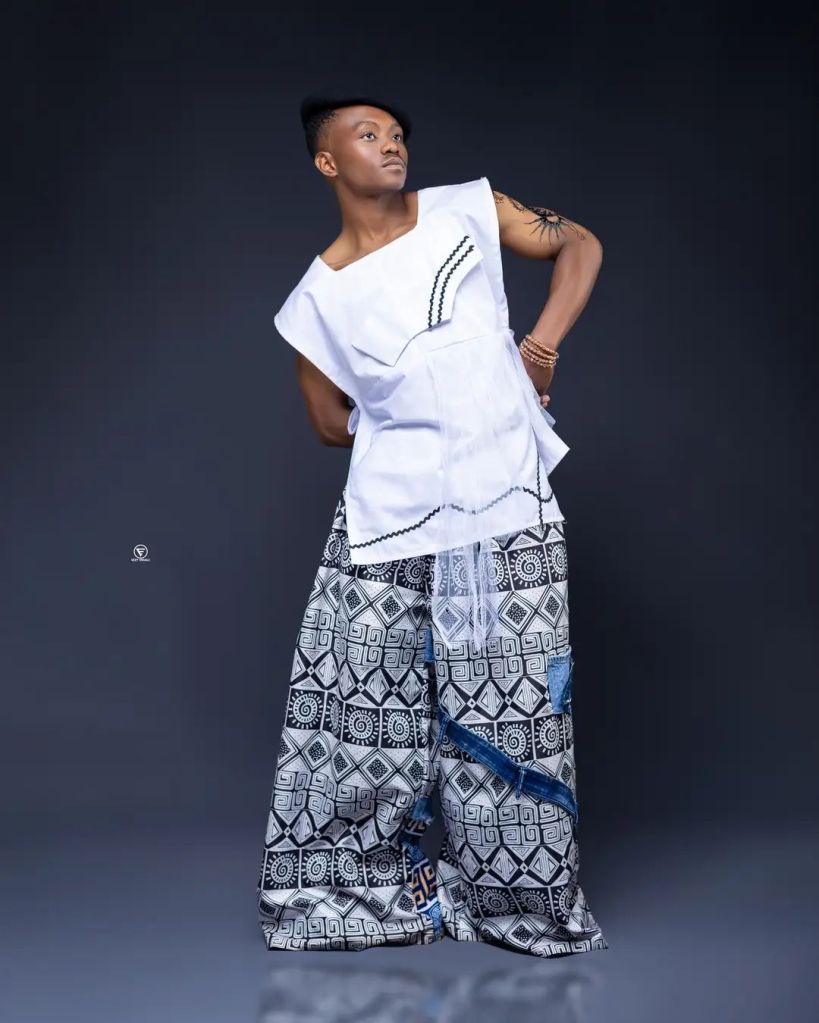
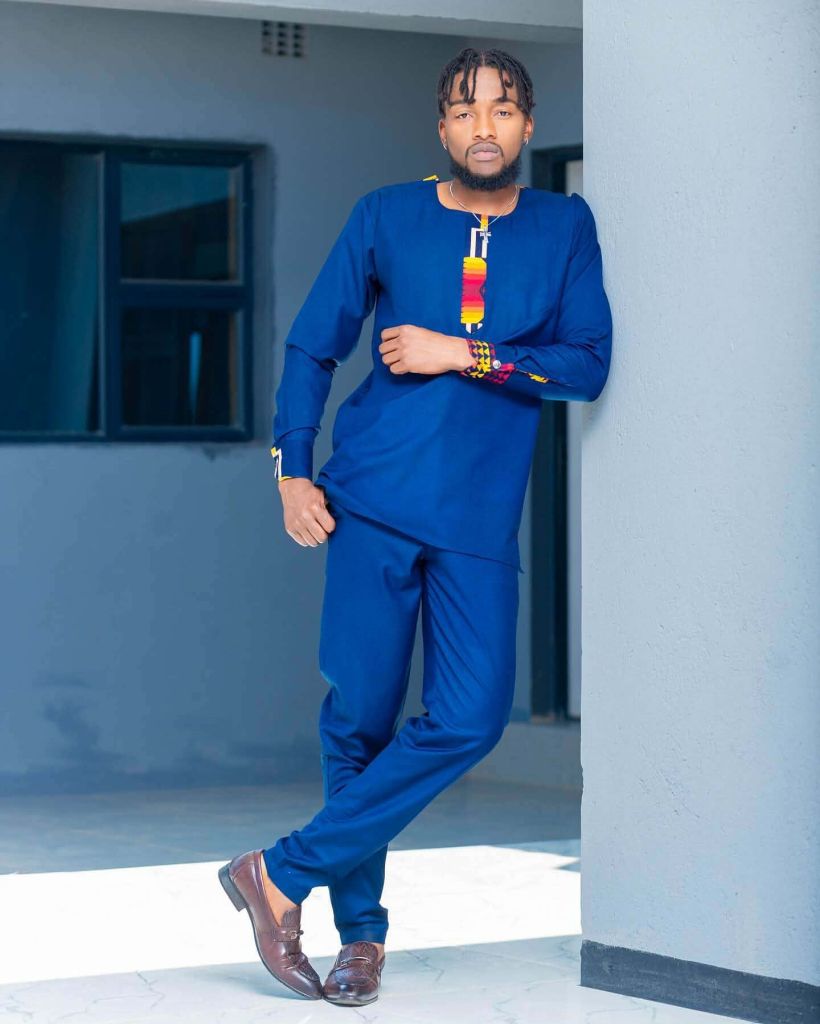
Step into the world of Terrence — Bulawayo’s laid-back showstopper who turns heads the moment he walks through the door. He’s walked for Listo Fashions, became the face House of Lumiere couldn’t stop calling back, and still finds time to shoot films and weddings behind the lens. Equal parts commercial model, cinematographer, and minister of the Word, Terrence is proof that African style isn’t just about what you wear — it’s about the story, the soil, and the swagger you bring. In this candid Q&A for Fashion Inspirations, he opens up about runway screams, biri-marung dance fails, why Sadza beats everything, and the advice he wishes he had when he started. Spoiler: authenticity wins every time.


Q: Terrence, for those meeting you for the first time, how would you describe yourself in three words?
A: I’d describe myself as a laid-back person, but I command attention when I enter rooms that matter.

Q: You’re involved in both pageantry and commercial modelling. Which one stole your heart first, and what drew you into the industry?
A: Commercial modelling stole my heart first because of the weight it carries. I’m able to express myself better there, think outside the box, and I’ve always wanted to be a brand ambassador for clothing lines or products. My love for fashion drew me into the industry.

Q: Bulawayo has produced incredible talent over the years. How has growing up in the City of Kings influenced your journey as a model?
A: Wow, this one is huge. If I talk about the influence I got from the City of Kings, we’d be here all day. I’m also into cinematography and acting, and those three things really shaped my journey. The knowledge I had made it easier to meet people who helped me get started.

Q: Every model has that one unforgettable moment on stage or during a photoshoot. What’s been your most memorable experience so far?
A: Haha, the most unforgettable moment was walking the runway for Listo Fashions when I was really in shape. When the ladies start screaming, it messes you up a bit and boosts your confidence to 1000%, but you still have to control yourself so you don’t mess it up. I still look at the pictures from that event and think, “Wow, I had it.”

Q: Be honest — what’s the funniest thing that’s ever happened to you during a pageant or modelling event?
A: The funniest thing makes me cringe  every time. They had us dancing to Biri Marung… and my friends were like, “Was the dancing necessary? You looked stupid!”  Trust me, I’ll never forget that day.

Q: When you’re not striking poses or walking the runway, what does a typical day in Terrence’s life look like?
A: When “lights, camera, action” stops, I switch into the guy behind the camera shooting movies, weddings, and other projects. I’m blessed to work both in front of and behind the lens. I’m also employed at Reign Gases, one of the biggest gas companies in Zimbabwe — always a busy man.

Q: Social media often shows the glamorous side of modelling. What’s one thing people would be surprised to learn about the reality of the industry?
A: One thing that might shock people is that I’m a minister of the Word of God, big time. And I love Sadza and offals over every other meal.

Q: If you could collaborate with any African fashion designer, photographer, or brand, who would it be and why?
A: If I could collaborate with a designer, it would be Kente Gentleman in Côte d’Ivoire. I love how they create those interesting suits with an African feel — I’d love to wear them. Locally, it’s definitely House of Lumiere. Beyond our relationship, she picked me up when I’d left the industry and said, “Measure this guy, I want him to wear my clothes. He’s my model now.” That’s how I came back. Shout to my friend Phil for taking me there at the time.

Q: Many young people look up to models and pageant contestants. What advice would you give to someone in Bulawayo who dreams of following in your footsteps?
A: My advice to upcoming models: push yourself, find inspiration, and know exactly who you are as a brand — it makes things easier. And never be too hungry to make it, because every industry has its demons. When you cut corners, they always bite you and throw it back in your face.

Q: Finally, let’s have some fun: if Terrence wasn’t a model, what career would you be pursuing today, and why?
A: If I wasn’t a model, trust me, I’d be doing a lot yoooo. I’ve already mentioned filming and acting. Besides that part of the industry, I think I’d be in security detail or special forces. I have a real love for that world.

South Africa Set to Host Supranational Royalty as Swann Lavigne and Eduarda Braum Arrive in June

South Africa Set to Host Supranational Royalty as Swann Lavigne and Eduarda Braum Arrive in June

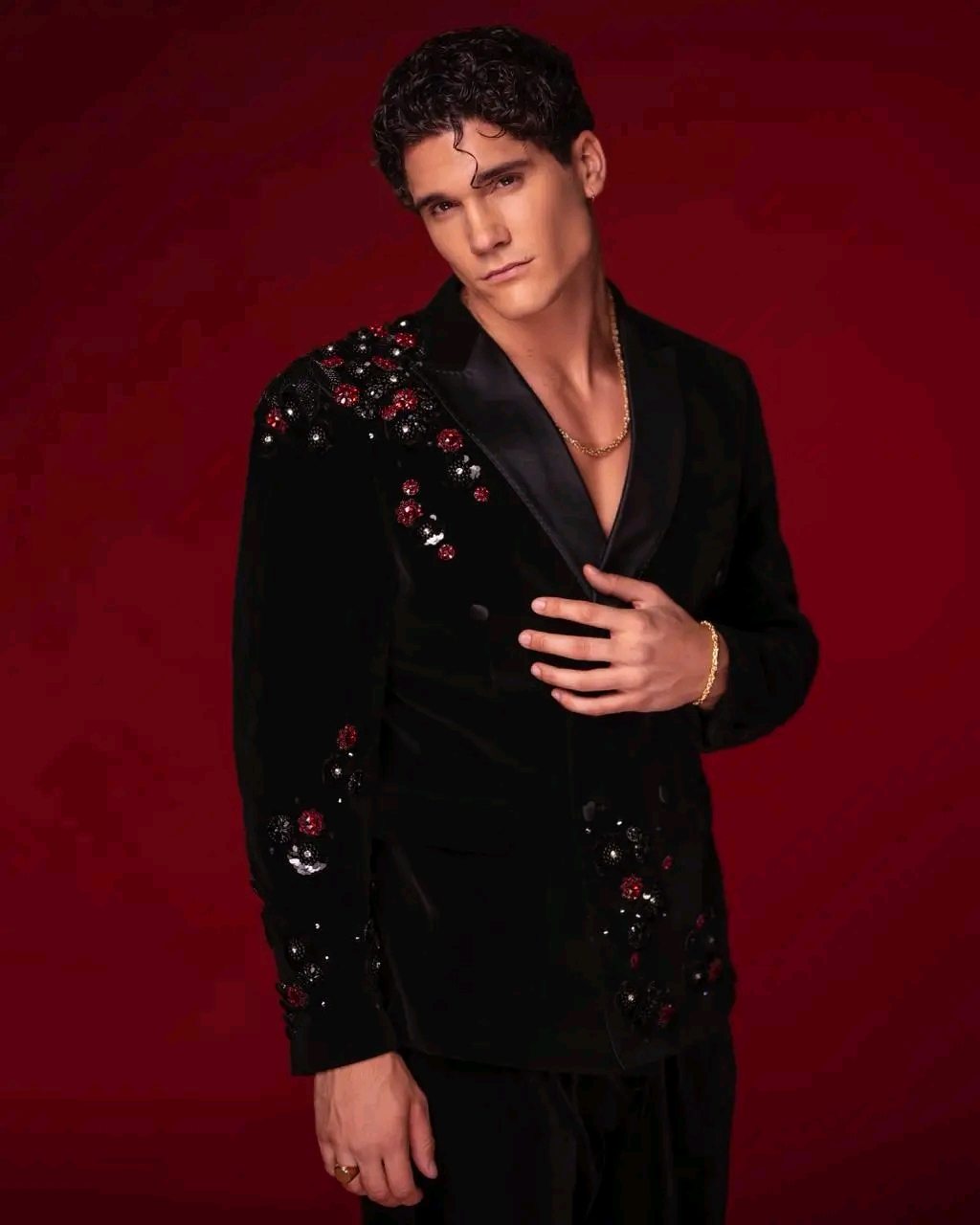
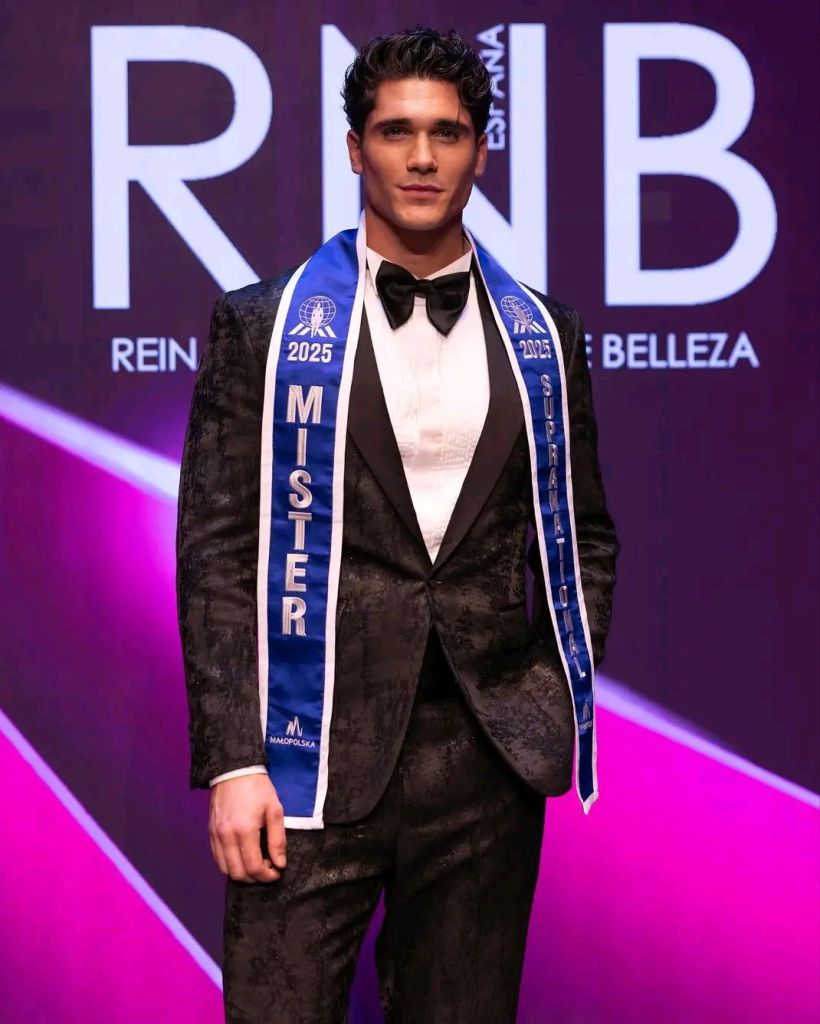
The Mister and Miss Supranational 2025 duo, Swann Lavigne from France and Eduarda Braum from Brazil, will be in South Africa in the first week of June, and the continent is watching.

The visit is more than a courtesy stop. South Africa is home to Dr Fezile McKenzie, Mister Supranational 2024, meaning the reigning king and queen will be in the same country as the former titleholder. That kind of continuity is rare in pageantry, giving fans and aspiring contestants a direct link between past and present.

Swann and Eduarda arrive carrying the global image of Supranational: poise, advocacy, and cultural respect. Their engagements will give South Africa’s pageant community a close look at how international titleholders represent the brand beyond finals night.

For South Africa, the visit reinforces its reputation as one of the strongest markets in the Supranational family. For Africa, it’s a signal that the continent is being recognized as a key part of the pageant’s global story. With Fezile McKenzie on home soil, the first week of June is set to be a landmark moment for Supranational in Africa.
Nomaqhikiza Mokoni Carries Zimbabwe’s Hopes and Her Own Vision into Miss Zimbabwe

Nomaqhikiza Mokoni Carries Zimbabwe’s Hopes and Her Own Vision into Miss Zimbabwe

For Nomaqhikiza Mokoni, the Miss Zimbabwe competition has become more than a personal pursuit. It’s a shared experience with a nation behind her. “I’m honestly feeling incredibly grateful,” she says of the journey so far. “It’s been emotional, exciting, humbling, and deeply meaningful in ways I didn’t expect.” Known for building quietly and working independently, Mokoni says the outpouring of support from fans at home and across the globe has changed the way she views the contest. “It reminds me this is no longer just about me. It’s become something much bigger. People voting, praying, posting, and showing up intentionally – it gives me even more motivation to show up with excellence, authenticity, and heart.”
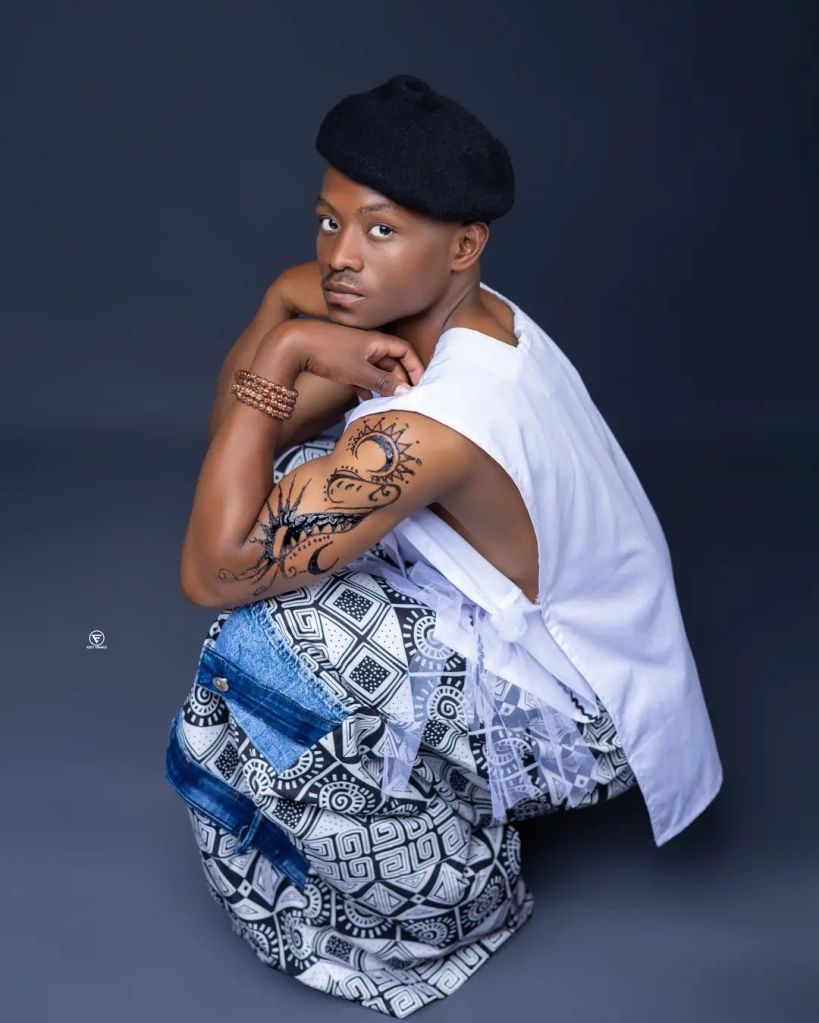
Standing among the top contenders, Mokoni understands what it means to carry Zimbabwe’s name on a national platform. “Representing Zimbabwe means everything,” she says. “It’s part of my identity, my values, and the woman I’ve become.” She sees the stage as a chance to reflect the country’s resilience, beauty, strength, and culture, but also as a personal mission. “I know what it’s like to grow up without always seeing your possibilities reflected back at you. If my journey helps even one young Zimbabwean believe differently about what’s possible for them, that matters deeply.”

Advocacy has long been part of Mokoni’s work, and she plans to deepen it when she returns home. Her immediate focus is on educational support for children in underserved and rural communities, because she believes education builds “foundation, dignity, and possibility.” She’s also mentoring over 200 aspiring fashion models, offering honest guidance, portfolio help, and professional exposure. Looking ahead, she wants to create something Zimbabwe lacks: a dedicated fashion-modeling agency and model camps focused on fashion work. “Beyond fashion, I want to keep building initiatives that create opportunity, guidance, and support for young people chasing their dreams. As I grow, I want to grow with others.”

When online chatter suggested she was out of the competition, Mokoni met it with composure rather than confrontation. “It reminds you how quickly narratives can form,” she says. “I’ve learned to respond with clarity, not emotion. It wasn’t about shutting something down, but giving people the truth respectfully. Public platforms come with attention and speculation, but how you respond says a lot about your character.” She addressed the misinformation calmly, then refocused on the competition.

As the contest continues, Mokoni holds to words that have carried her this far: “Where you begin does not determine where you can go.” And for her, beauty starts closer to home – “Beauty begins with self-belief.”

Create your own website, free on WordPress.com.Create your own website.
Start free