BEHIND THE RUNWAY: FIVE QUESTIONS FOR Amodibetso

The runway is 30 seconds of light, music, and movement. But behind that moment are hours of rehearsals, self-doubt, discipline, and storytelling. In 2026, African fashion is stepping onto bigger stages, and the models walking for it are more than hangers for clothes — they are interpreters, ambassadors, and storytellers.
For this edition of Behind the Runway, we speak to Amodibetso, a model who is defining what it means to represent contemporary African style while staying true to personal identity. From the look that felt like art, to the realities audiences never see, here are five questions on what it really takes to shape fashion right now.
Q. The Look That Stayed With You
You have worn designs from different collections this year. Is there one look that has stayed with you long after leaving the runway, and what made that particular design memorable for you?
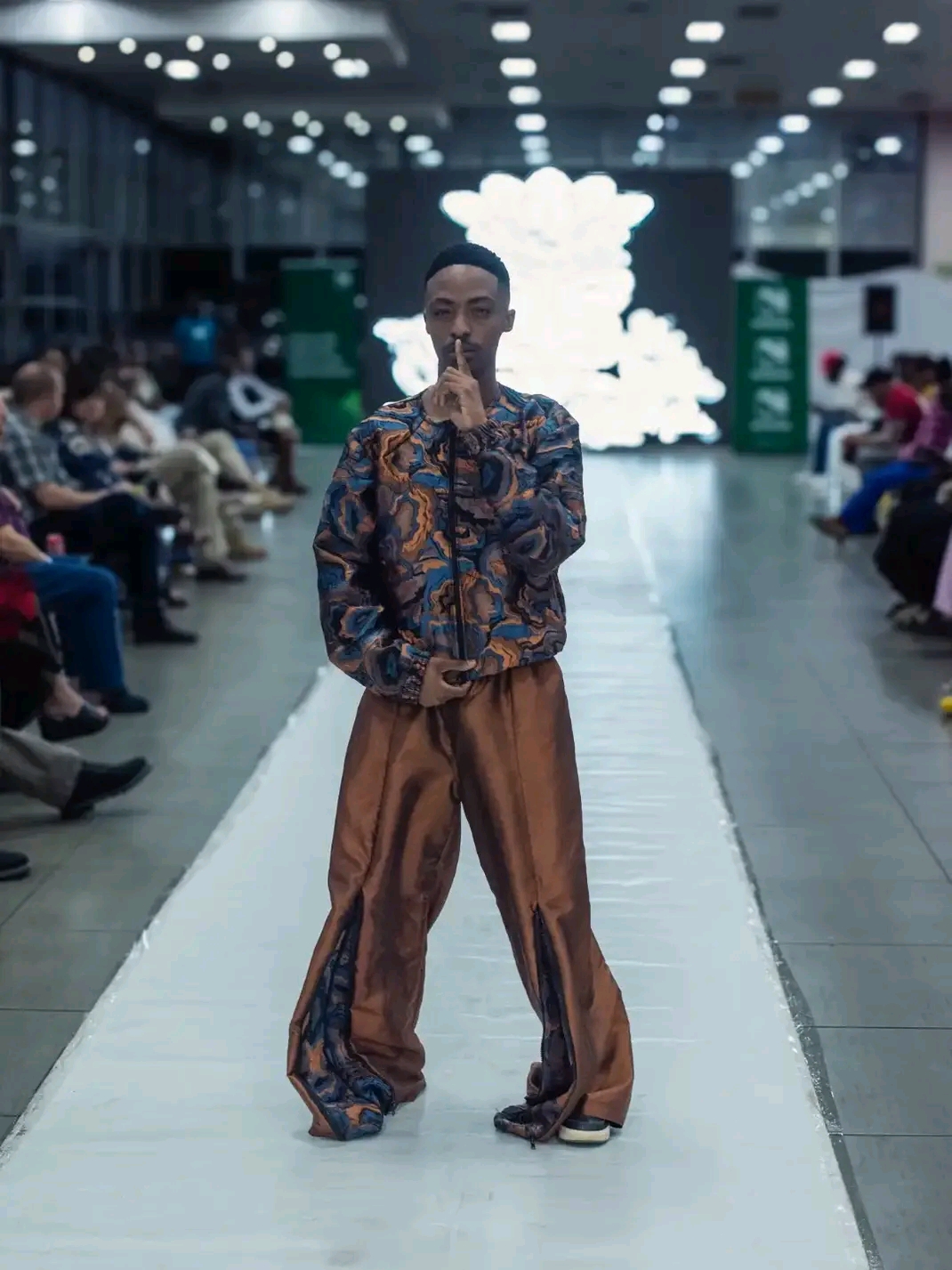
A. The look that stayed with me was the one where I was wearing a brown and blue marbled bomber with wide leg pants because it represent me. The way it was styled it has a touch of street wear which is the kind of clothes I love to wear.
What made it memorable wasn’t just the design but how it made me feel. It’s simple but so powerful. It feels like African luxury meets street, the look itself feels like an Art. It was designed by Designer Destiny Njoko (Thulo Couture).
Q. Beyond the Walk
A model can wear a designer’s creation, but bringing it to life requires more than a confident walk. How do you interpret the mood, character and story of a collection, and how much of your own personality do you bring to the runway?
A. For me how I interpret the mood, character and story relies on what type of collection am I about to wear and how does the collection feel when I touch it. I basically study it and I ask myself, who is the man am I becoming in this outfit?
I bring my own confidence and mood to it. I don’t just wear it, I become the moment for just 30 seconds.
Q. The Reality Behind the Runway
Fashion shows often present a polished picture of the industry, but the work behind the scenes can be demanding. What has your experience at this year’s runway shows taught you about the realities of modelling that audiences rarely get to see?
A. People only see the glam but they don’t see the hours we spend behind the scenes doing rehearsals, fittings, changing a couple of times, pushing yourself to go for rehearsals even when you are tired.
This year taught me that modeling is discipline. You need to have discipline in order to make it and to not allow negativity from others to define you or make you lose focus on what you want. You also need to be professional even when you’re tired. It might look effortless but it’s real work.
Q. Identity, Representation and African Fashion
As African designers gain opportunities to present their work to wider audiences, models also play a role in communicating the identity behind each collection. When walking for African designers, how important is it to you that the garments reflect the continent’s cultures, creativity and contemporary identity without being limited to traditional expectations?
Q. From the Runway to the Global Stage
Having walked at fashion shows this year, what do you believe is the next step in your modelling career? Are you looking towards international fashion weeks, major fashion campaigns, luxury brands or building your own identity beyond the runway?
A. Yes, I’m definitely looking forward to be seen internationally doing what I love. This year’s shows gave me confidence that I really belong in this industry.
The next step for me is to push beyond local shows. I want to walk at African shows then internationally. I’m looking forward to also work with clothing brands and fashion campaigns.
Currently I’m building my own brand as a model. I want to be an inspiration to other young people that if he managed to make it then it means I can too! I want them to know that age is just a number. They shouldn’t let age define them. Instead they should start pushing at a young age for them to be able to grow and see the beauty of archiving good things at a young age.

